/pic9156909.png) VS
VS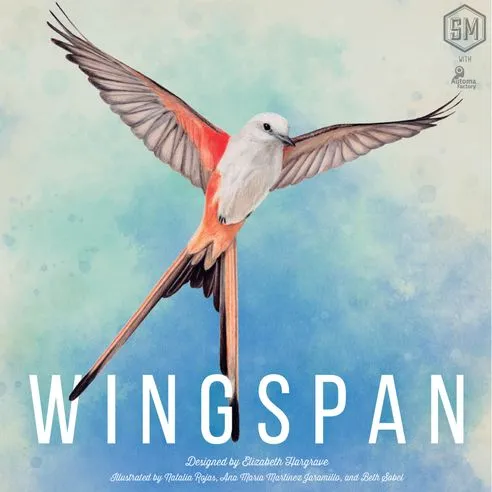
Catan vs. Wingspan: Which Gateway Game First?
If you want a single answer: get Wingspan first if you want a calm, friendly game that plays great with one to five people, and get Catan first if you want trash-talking, table-wide haggling, and a game your whole family already half-knows. Both are excellent gateway games, meaning they're built to pull new players into the hobby without a 40-page rulebook. They just pull in very different directions.
Catan (1995) is the old classic that taught a generation what a "modern board game" even is. Wingspan (2019) is the darling that showed up two decades later with beautiful birds, a kinder mood, and a built-in solo mode. This guide breaks down how they actually feel to play, who each one is for, and how to pick the right first box.
The Two-Sentence Verdict
Catan is a negotiation game wearing a resource-management costume. You roll dice for wood, brick, sheep, wheat, and ore, then beg, bribe, and trade your way to building roads and settlements before anyone else hits 10 points.
Wingspan is an engine-builder. You play birds onto your board, and each bird gives you a power that triggers other powers, so by the end of the game one action sets off a chain reaction of eggs, food, and cards. Nobody's haggling. Everyone's quietly building their own little nature preserve. That difference in mood is the whole decision, really.
How Each One Actually Plays
Catan lives and dies on player interaction. The dice decide which resources come out each turn, and if you don't have what you need, you trade for it. That means talking, dealmaking, and the occasional betrayal when someone refuses to sell you the one ore you need. It's loud and social in the best way. The downside: bad dice luck is real, there's no catch-up mechanic, and a player who falls behind can spend the back half of the game just watching.
Wingspan is slower-burning and more solitaire-ish. You're mostly optimizing your own board, and it's genuinely hard to mess with another player. The game teaches you as you go, the iconography is clean, and the card-driven combos feel satisfying without being brain-melting. The flip side: if you love direct conflict and reading the table, Wingspan can feel a little too polite. You can have a lovely time and barely notice what your opponents did.
Player Count, Setup, and Downtime
Wingspan covers 1 to 5 players and has a real, well-regarded solo mode against an automated opponent. If you game alone, with a partner, or in unpredictable group sizes, that flexibility is a genuine reason to buy it first. Turns are quick and the rounds keep moving.
Catan's base box is built for 3 to 4 players. You can stretch it to 5 to 6 with an expansion, but there's no solo or two-player base experience worth chasing (the official two-player variant is fine, not great). Catan also shines as a group event where the trading energy fills the room. If your nights are usually one or two people, Catan is the wrong first buy. If you've got a regular crew of four, it's a strong one.
Teaching It to New People
Both teach fast, roughly 10 to 15 minutes of rules before the first turn. Catan's edge is familiarity. Lots of people have heard of it or played it once at a cousin's house, so there's less resistance at the table. The rules are simple, and the trading loop clicks almost immediately.
Wingspan's edge is forgiveness. Because you can't really lose by being attacked, nervous beginners relax faster. There's no "everyone gangs up on the new player" moment that Catan can produce. If your audience is anxious about games or burned out on competitive ones, Wingspan is the gentler on-ramp. If they want the classic shared experience everyone references, Catan delivers that.
So Which Do You Buy First
Buy Catan first if you have a regular group of three or four, you like negotiation and a bit of friendly conflict, and you want the game everyone already half-recognizes. It's a noisy, social classic for a reason.
Buy Wingspan first if you play solo or in twos a lot, you want something calmer and prettier on the table, or you're teaching people who don't love confrontation. It's also a better fit if you suspect you'll want a deeper engine-building hobby later, since it points you toward games like Terraforming Mars and Everdell. Honestly, most collections end up with both. But if you can only open one box this month, let your usual player count and your tolerance for table conflict make the call.
Pick Catan if you want trading and table talk, Wingspan if you want a calm engine-builder that also plays solo.
Common questions
Is Wingspan or Catan easier for total beginners?
They're close, and both teach in about 10 to 15 minutes. Wingspan is more forgiving because players can't really attack each other, so nervous beginners relax faster. Catan is easier to bring to the table since more people already recognize it, but a beginner who falls behind on dice luck can have a rougher time.
Can I play these games solo or with just two people?
Wingspan, yes. It supports 1 to 5 players and has a solid solo mode against an automated bird (the Automa). Catan is built for 3 to 4 in the base box, and its two-player and solo options are weak. If most of your sessions are one or two people, Wingspan is the clear pick.
If I like one, will I like the other?
Not necessarily, because they scratch different itches. Catan fans tend to love trading, table talk, and direct competition. Wingspan fans tend to love quiet optimization and watching their own engine grow. Plenty of people own both and reach for each on different nights, but loving one doesn't guarantee loving the other.