Azul vs Calico: Which Should You Buy?
I get why these two end up in the same shopping cart. They're both small-box tile games with rules you can teach in a few minutes, they both look wonderful on the table, and they both run about 30-45 minutes. On the surface they're siblings: pretty pieces, light rules, sneaky depth. If you're buying one tile puzzle this year, these are usually the two finalists.
But here's the thing that actually decides it. Azul is a game you play against the people at the table, and Calico is a game you play against yourself while other people happen to be sitting nearby. Azul is shared piles and denial, grabbing tiles just so your opponent can't have them. Calico is a head-down optimization puzzle with cats on top, famously close to solitaire. Once you know which of those sounds like your kind of night, the choice mostly makes itself.
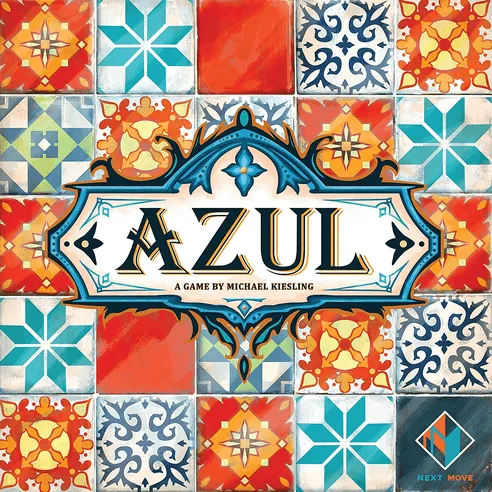
Azul
2017 · Michael Kiesling
The chunky tiles feel like candy, and the game under them is a clean little knife fight.
Affiliate link — we may earn a commission at no extra cost to you.
/pic8124431.jpg)
Calico
2020 · Kevin Russ (with Molly Johnson, Robert Melvin, and Shawn Stankewich), Flatout Games / AEG
One of the best small-box puzzles out there, as long as you know going in that it's a quiet, brain-burny solitaire with cats on top, not a cozy group hang.
Affiliate link — we may earn a commission at no extra cost to you.
Azul
- The resin tiles are so satisfying you'll fidget with them
- You can teach it in two minutes and the depth shows up right away
- It's fantastic at two players
- There's basically no theme, it's pure pattern and timing
- A runaway leader at four players can be hard to catch
Calico
- Gorgeous Beth Sobel art and a theme that hooks people instantly
- Tiny ruleset, but nearly every tile placement is a genuinely hard choice
- Scenario goals and modular setup give it real replay value
- Almost no player interaction, it plays like solitaire side by side
- Can trigger serious analysis paralysis and drag long past the box time
Azul and Calico both sit in our Family list. See the full Family ranking to find where each one lands and what else is worth a spot on your shelf.
How they actually play
In Azul, you draft sets of tiles from shared piles and lay them on your board for points. Simple, right? The catch is that every tile you take leaves the rest for everyone else, so half of what you're doing is deciding what you're willing to hand your opponents. That's where the game lives. It gets slow and a little vicious, especially at two, where you'll grab tiles you don't even want just to keep them away from the person across the table. And those chunky resin tiles are so satisfying you'll fidget with them between turns.
Calico is a different animal (a cat, specifically). You're sewing a quilt, placing hexagonal patch tiles so colors and patterns line up just so. Six matching colors gets you a button, three matching patterns in the right spot earns you a cat curled up on your quilt, and you're chasing design goals in the middle of your board the whole time. You draw from a shared market, so the tile you need vanishes constantly, but that's about as interactive as it gets. Nobody's taking anything from you in Calico. The puzzle itself does the squeezing, and by the last few turns it squeezes hard.
Complexity and learning curve
On paper they're the same weight, and honestly the teach is easy for both. Azul takes about two minutes to explain and Calico takes about five. But how they feel in your brain is very different. Azul's depth shows up right away without ever making anyone feel dumb. It's the game I'd hand to people who say they don't really do board games, because by the second round they've usually forgotten they said it.
Calico is sneakier. Turn one feels breezy, and then the buttons, cats, and design goals start pulling against each other, and by the end nearly every placement is a genuinely hard choice. It's famous for triggering serious analysis paralysis, and games can drag well past the time on the box. Calmer players and folks who came to chat will drift. So if your table includes newer gamers or overthinkers, Azul is the safer first buy by a mile.
Replayability and table presence
Azul's staying power comes from the players, not the box. It's pure pattern and timing with basically no theme, so there's no story pulling you back, just the itch for a rematch. And that itch is real. It's the kind of two-player game that's easy to come back to night after night, which is exactly why I'd call it a two-player purchase first. The one wobble is at four, where a runaway leader can be hard to catch.
Calico's replay value is built into the box instead. Scenario goals and a modular setup mean the puzzle genuinely changes between plays, and it plays solo, which Azul doesn't. Beth Sobel's art is gorgeous and the cat theme hooks people instantly, so it has serious shelf appeal too. The catch is that pretty cover sets a trap. It plays like solitaire side by side, so if your group wants real back-and-forth, all that variety won't save the evening.
For most people, most of the time, buy Azul. It's the higher-rated game here for a reason: easy to teach, brilliant at two players, and welcoming to people who swear they don't like board games, while still giving the sharks plenty to chew on. Buy Calico instead if you're mainly playing solo, or if you know your table is full of puzzle lovers who enjoy sitting quietly with a genuinely hard optimization problem. Just don't buy Calico expecting a cozy group hang about cats, because it's thinky, quiet, and a touch ruthless under all that quilt. Go in clear-eyed and both of these earn their shelf space.
Azul is the one you play against your friends, Calico is the one you play against yourself, and that's really the whole decision.