Azul vs Cascadia: Which Should You Buy?
These two get cross-shopped constantly, and it makes sense. Both are gorgeous, both teach in about five minutes, and both ask you to lay pretty pieces into a growing pattern for points. If someone says they want something quick, good-looking, and easy to learn that still makes you think, Azul and Cascadia are usually the two boxes that end up in their hands at the same time.
But they pull in opposite emotional directions, and that is the whole decision here. Azul is a quiet little knife fight, a game about denying your opponent the tiles they want. Cascadia is a calm, conflict-free puzzle where everyone builds their own corner of the Pacific Northwest in peace. Same shelf, same five-minute teach, completely different feeling once the pieces start moving.
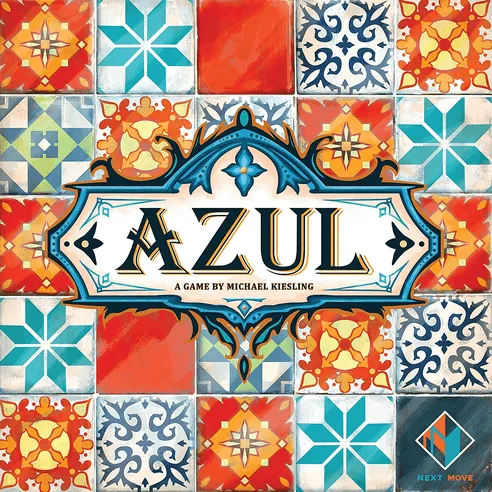
Azul
2017 · Michael Kiesling
The chunky tiles feel like candy, and the game under them is a clean little knife fight.
Affiliate link — we may earn a commission at no extra cost to you.
/pic5100691.jpg)
Cascadia
2021 · Randy Flynn (art by Beth Sobel)
One of the best gateway games out there, and a genuinely great solo game, as long as you're fine building your own quiet corner instead of fighting anyone.
Affiliate link — we may earn a commission at no extra cost to you.
Azul
- The resin tiles are so satisfying you'll fidget with them
- You can teach it in two minutes and the depth shows up right away
- It's fantastic at two players
- There's basically no theme, it's pure pattern and timing
- A runaway leader at four players can be hard to catch
Cascadia
- Teaches in five minutes but the placement decisions actually have teeth
- Scoring card combos mean it stays fresh for dozens of plays
- Gorgeous Beth Sobel art and a calm, conflict-free table
- Almost no player interaction, so it can feel like everyone's playing solitaire
- The random tile-and-token pairs sometimes hand you nothing you want
Azul and Cascadia both sit in our Family list. See the full Family ranking to find where each one lands and what else is worth a spot on your shelf.
How they actually play
In Azul you draft matching tiles from shared piles and lay them onto your board, but every tile you take leaves the rest for everyone else. So half of what you are really doing is deciding what you are willing to hand the person across the table. At two players it turns slow and a little vicious, a game of denial where you will grab tiles you do not even want just to keep them away from someone. The chunky resin tiles feel like candy in your hand, and the depth shows up almost immediately.
Cascadia is the gentler animal. You draft a hex of terrain paired with a wildlife token, slot the hex into your growing map, and place the animal on a matching spot. Bears want to pair up, salmon want to run in lines, hawks want their space. Each turn is a tidy knot of choices, but you and your opponents build completely separate ecosystems, so there is barely any interaction beyond quietly racing for the same tile. Players online compare it to multiplayer solitaire, and that is a fair read.
Complexity and learning curve
These two are genuinely close in weight, both sitting at Light-Medium and both teachable in about five minutes. The difference is what kind of brain they ask for. Azul is pure pattern and timing with no theme to lean on, so beginners grasp the rules instantly but feel the bite of denial right away. Cascadia layers in swappable scoring cards, which means there is a touch more to track as your map sprawls, and figuring out which animal patterns are actually scoring you points can get fiddly late in the game.
Neither will scare off a new player, but the person who bounces off Azul is the one who needs a story to stay engaged, since it is shapes and timing full stop. The person who bounces off Cascadia is the one who wants conflict, because nobody is attacking you here.
Replayability and table presence
Azul leans on its components and its head-to-head tension. There is no card variety to shuffle, but the two-player duel is the kind of thing you come back to night after night, and the tiles are so satisfying you will fidget with them between turns. The runaway-leader problem can show up at four players, which is why most people who love it play it as a duel.
Cascadia has the edge on raw variety thanks to those swappable scoring cards, which give you a mountain of replay value before combos repeat, and its solo mode is so good it won a Best Solo award. The Beth Sobel art is lovely and the table stays calm and welcoming. The tradeoff is the randomness: you are stuck with the four tile-and-token pairs on offer, and some turns none of them fit your plan.
Buy Azul if you mostly game as a duo and you like a little quiet cruelty, the satisfying click of denying someone the exact tile they needed. Buy Cascadia if you want a calm, conflict-free puzzle for family night or a quiet evening alone, since its solo mode and scoring-card variety are genuinely excellent. Azul is the sharper, meaner two-player experience; Cascadia is the warmer, more flexible one that welcomes solo and family play. If your table includes kids or someone who hates being attacked, Cascadia is the safer pick.
Azul is a tidy little knife fight; Cascadia is a peaceful puzzle you can play alone or with the whole family.