Harmonies vs Azul: Which Should You Buy?
If you're shopping for one beautiful, easy-to-teach abstract game, these two keep ending up in the same cart together, and I get why. Both are light-medium tile games that play in 30-45 minutes, both look fantastic on the table, and both are the kind of game you can hand to someone who swears they don't do board games. They even share the same basic rhythm: take pieces from a shared middle, place them on your own board, score points for the patterns you make.
Here's the difference that actually decides it. Harmonies is a peaceful, heads-down puzzle where you're mostly tending your own garden. Azul looks just as polite, but every tile you take leaves the rest for your opponents, so half the game is quiet denial. One of these games wants you calm. The other wants you a little bit mean.
/pic8026369.png)
Harmonies
2024 · Johan Benvenuto
One of the prettiest, friendliest puzzles on the shelf right now, and it earns its hype with multiplayer. Just don't buy it for the solo mode.
Affiliate link — we may earn a commission at no extra cost to you.
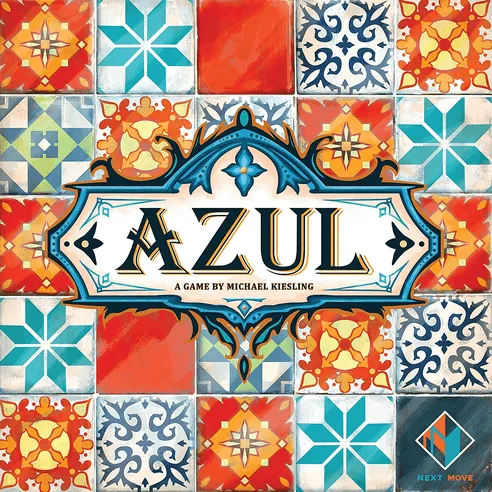
Azul
2017 · Michael Kiesling
The chunky tiles feel like candy, and the game under them is a clean little knife fight.
Affiliate link — we may earn a commission at no extra cost to you.
Harmonies
- Genuinely beautiful on the table, and the art does real gameplay work
- Teaches in five minutes but the two-track scoring keeps your brain busy
- Plays fast and stays light without feeling thin
- The central card market can go stale with no way to refresh it
- Solo mode is a big step down from the multiplayer game
Azul
- The resin tiles are so satisfying you'll fidget with them
- You can teach it in two minutes and the depth shows up right away
- It's fantastic at two players
- There's basically no theme, it's pure pattern and timing
- A runaway leader at four players can be hard to catch
Harmonies and Azul both sit in our Family list. See the full Family ranking to find where each one lands and what else is worth a spot on your shelf.
How they actually play
In Harmonies, you grab three colored tokens from a central pool each turn and stack them on your own board to build mountains, water, trees and fields, then settle animals on top of the patterns you've made. The hook is the double scoring. You earn points for the terrain you sculpt and for the animal cards you complete, and those two goals constantly tug against each other in a really satisfying way. The art by Maeva da Silva isn't just pretty either, it's doing actual gameplay work. The whole thing feels like a quiet brain stretch, and honestly, that's the point.
Azul strips things down even further. You draft sets of tiles from shared piles and lay them on your board for points, and that's basically the whole rulebook. The catch is that every tile you take leaves the rest for everyone else, so you spend half your turns deciding what you're willing to hand your opponents. Sometimes you'll grab tiles you don't even want just to keep them away from the person across the table. It's shapes and timing, full stop, no story to lean on. But those resin tiles are so satisfying you'll fidget with them while you plot.
Complexity and learning curve
Neither one is going to scare anybody. Azul teaches in about two minutes, and the depth shows up right away. By the second round, the person who said they don't really do board games has usually forgotten they said it. Harmonies takes maybe five minutes to explain, and while the turns are simple, that two-track scoring keeps your brain busier than you'd expect. It lands with kids, non-gamers, and heavier gamers looking for a palate cleanser.
The one small wrinkle with Harmonies is the end. Scoring drags a bit because there are so many little ways to earn points, so budget a few extra minutes for the final count. Azul's scoring is snappier, but the game itself has more sting, so first-timers may lose a round before they see the denial game coming. Neither is a problem, just know which flavor of first game you're signing up for.
Replayability and table presence
Azul is the proven keeper here, and it's at its absolute best with two. That's when it turns slow and a little vicious, the kind of duel that's easy to come back to night after night. At four, watch out for a runaway leader, because once someone gets ahead they can be hard to catch. Harmonies shines at two to four players who want the opposite energy: low conflict, everyone happily building their own little world, racing only for tokens and animal cards in the middle.
Both have a wart worth naming. Harmonies' central card market can go stale with no built-in way to refresh it, which stings on a slow turn, and its solo mode is a real step down from the multiplayer game, so don't buy it as a solitaire puzzle even though the box says 1-4. Azul's weakness is theme, or the total lack of one. If you need a reason to care beyond the pattern itself, it won't give you one. For table presence, though, it's a coin flip. Both are genuinely beautiful, the kind of games that make people wander over and ask what you're playing.
If you mostly play with one other person, buy Azul and don't overthink it. It's fantastic at two, teaches in minutes, and it's the game you'll still be pulling off the shelf years from now. If your table is a rotating mix of family, kids, and friends with different experience levels, Harmonies is the safer gift, because it's gentle, gorgeous, and never picks a fight, and it handles three and four players without the runaway leader problem. Skip Harmonies if you play mostly solo, and skip Azul if anyone at your table takes tile denial personally. Honestly, they're different enough that plenty of shelves end up with both.
Azul for the cozy duel with teeth, Harmonies for the whole family peacefully building their own little worlds.