Patchwork vs Azul: Which One Should You Get?
People cross-shop these two for the same simple reason: you want one beautiful, easy-to-teach game that lives by the front door and gets pulled out for date night, coffee with a friend, or a quiet evening when nobody has the brain for anything heavy. Both have that lovely tactile quality, the kind where you end up fidgeting with the bits long after the round is over, and both teach in a couple of minutes flat. They are the games you hand to someone who swears they don't really do board games, and watch them quietly change their mind.
What they share is that clean, abstract, spatial-puzzle feel. There is no luck of the dice deciding your night and no sprawling rulebook to wade through. You are placing shapes, watching your little board fill in, and trying to be a touch smarter than the person across the table. Where they part ways is the mood. One is warm and contented, a solo quilt you happen to be racing someone else to finish. The other, Azul, is a tidy little knife fight dressed up in candy-colored tiles.
/pic9273518.jpg)
Patchwork
2014 · Uwe Rosenberg
One of the best two-player games ever made, and it teaches in five minutes. If you only own one game for couples or roommates, this is a very safe pick.
Affiliate link — we may earn a commission at no extra cost to you.
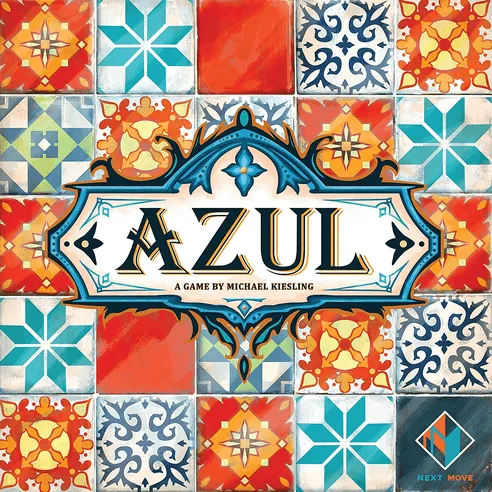
Azul
2017 · Michael Kiesling
The chunky tiles feel like candy, and the game under them is a clean little knife fight.
Affiliate link — we may earn a commission at no extra cost to you.
Patchwork
- Rules take about five minutes, and it's all icons and shapes, so language and reading age don't matter
- Tiny decisions carry real weight: buttons, time, and board space all pull against each other
- Plays in 15-30 minutes and resets fast, so one game becomes three
- The three buyable patches are luck of the draw, so a bad rotation can leave you scoring negative
- It's a parallel solitaire with sharp elbows, not a chatty, interactive game
Azul
- The resin tiles are so satisfying you'll fidget with them
- You can teach it in two minutes and the depth shows up right away
- It's fantastic at two players
- There's basically no theme, it's pure pattern and timing
- A runaway leader at four players can be hard to catch
Patchwork and Azul both sit in our Family list. See the full Family ranking to find where each one lands and what else is worth a spot on your shelf.
How they actually play
Patchwork is the cozier of the two, and it shows in every turn. You and one other person are sewing a quilt, buying odd Tetris-style fabric pieces from a shared market and fitting them onto your personal board while juggling two little currencies, buttons and time. The clever twist is that whoever is further back on the time track goes next, so you can sometimes take two or three turns in a row while your opponent sits and watches. Most of your attention stays on your own quilt, deciding which awkward shape plugs which awkward gap, which makes it feel less like a fight and more like a contented little optimization race you happen to be running side by side.
Azul is sharper and a degree meaner. You draft sets of matching tiles from shared piles and lay them onto your board for points, and the catch is the whole game: every tile you take leaves the rest behind for everyone else. So half of what you are doing is deciding what you are willing to hand the person across the table. At two players especially it turns slow and a little vicious, a game of denial where you will grab tiles you do not even want just to keep them out of someone else's pattern. Patchwork lets you build your own quiet world; Azul keeps dragging your eyes back to what your opponent is about to do.
Complexity and learning curve
These two are about as even as it gets on rules weight, both sitting in that light-medium pocket where you can teach the whole thing in two minutes and the depth shows up almost immediately. Azul might be the very slightly faster teach, since drafting tiles and filling rows is intuitive on sight, but Patchwork's time-track turn order is the one quirk that trips first-timers, and once it clicks it never confuses anyone again.
Neither will bounce a newcomer. The difference is who keeps coming back. Azul rewards players who enjoy reading an opponent and timing a denial, so a competitive person clicks with it fast. Patchwork is gentler on the ego, since the worst night you have is a slightly gappier quilt than the other person, which makes it the safer pick for someone who tenses up when a game feels confrontational.
Replayability and table presence
Azul wins on raw table presence. The chunky resin tiles genuinely feel like candy, they are the thing people pick up and fidget with, and the finished mosaic looks great. It also stretches to four players where Patchwork is strictly a two-player affair, though be warned that a runaway leader at four can be hard to catch, and Azul is at its absolute best as a two-player duel anyway. For variety, the shifting tile market means no two games draft the same.
Patchwork holds up beautifully over many plays precisely because it is small and self-contained. It is the kind of two-player game that is easy to come back to night after night, where you slowly learn which pieces are worth overpaying for and how to bank time. If you are exclusively a couple or a pair of regulars, Patchwork's focus is a feature. If you sometimes have a third or fourth person around, or you just want the louder, prettier, slightly crueler experience, Azul earns its spot and keeps it.
Buy Patchwork if you are a couple or a steady pair who want a warm, low-conflict puzzle you can play night after night without anyone leaving the table grumpy. Buy Azul if you like reading an opponent, timing a little cruelty, and owning a game that can also stretch to three or four people when company shows up. Azul is the prettier, meaner one; Patchwork is the cozier, more personal one. Honestly, if your shelf has room, they make a perfect two-player pair.
Patchwork is the cozy quilt you build beside someone; Azul is the gorgeous little knife fight you build against them.