 Guide
GuideWhat Does 'Board Game Weight' Mean?
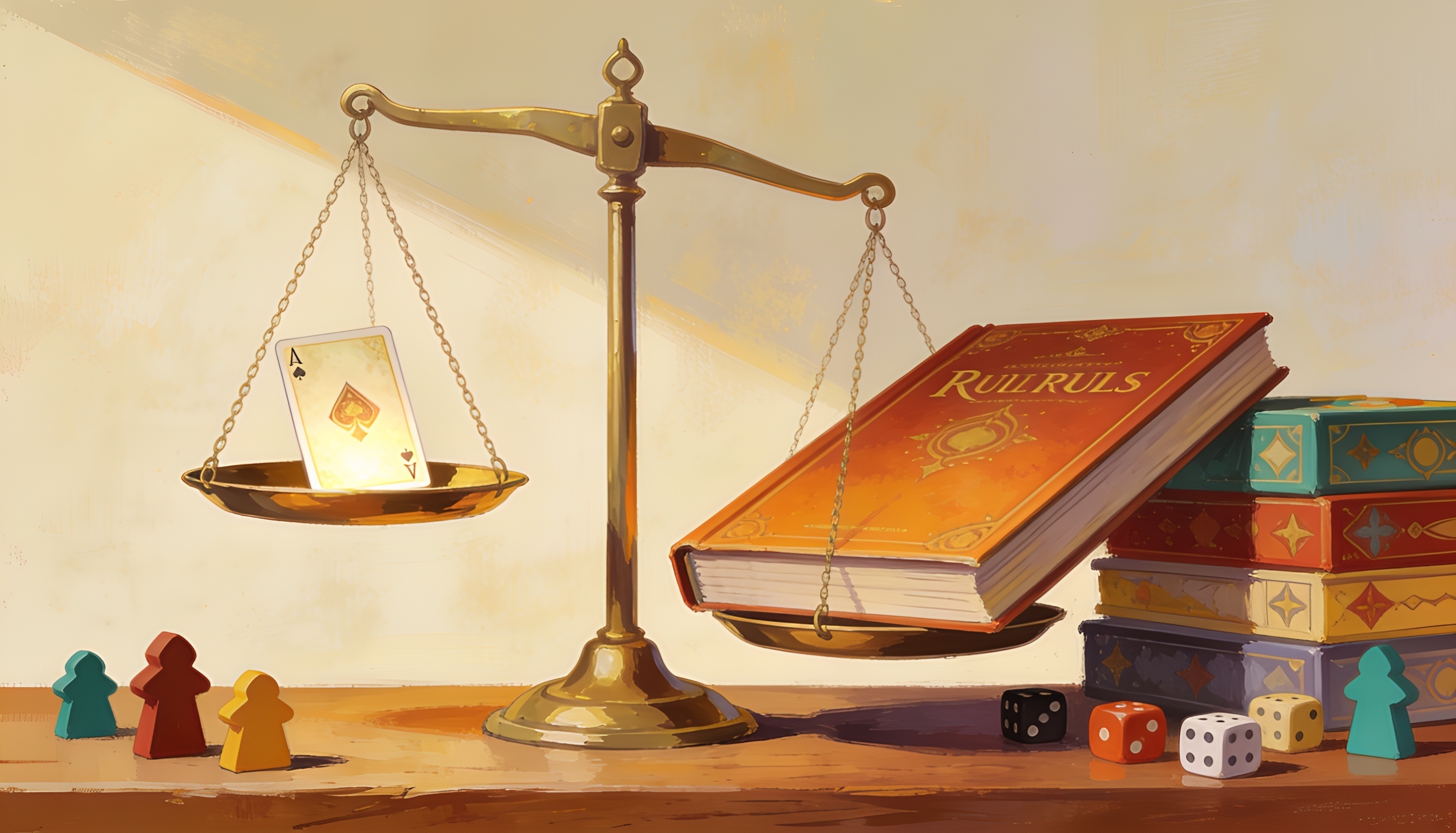
"Board game weight" is a 1 to 5 rating that tells you how complex a game is to learn and play, with 1 being dead simple and 5 being a brick of a rulebook you study before anyone sits down. It's the number you see on BoardGameGeek (BGG) listings, and it's the single fastest way to guess whether a game will click with your group or send half the table to their phones.
The catch is that weight measures complexity, not quality or fun. A 2.0 game can be brilliant and a 4.5 game can be a slog. So the real skill isn't memorizing numbers. It's learning to match a game's weight to the people you're playing with. Let's break down what each level actually feels like, and how to pick.
Where the weight number comes from
On BoardGameGeek, weight is a community average. Anyone who has played a game can rate its complexity from 1 (very light) to 5 (very heavy), and BGG averages those votes into the number you see on the game's page. So Wingspan sitting around 2.4 isn't a publisher claim. It's thousands of players agreeing on roughly how much brain the game asks for.
One thing to know up front: the scale isn't linear. The jump from a 2 to a 3 feels bigger than the number suggests, and a 4 isn't twice as hard as a 2. It's closer to four times as hard. Each full point is a real step up in rules, decisions, and the odds someone forgets how their turn works.
What each weight level actually feels like
Weight 1 to 1.9 (light): Rules fit on a card or two and you can teach them in a couple of minutes. Think Ticket to Ride (around 1.8) or Sushi Go. Great for mixed groups, family nights, and people who have never touched a hobby game. Nobody needs a strategy lecture.
Weight 2 to 2.9 (medium-light to medium): This is the sweet spot for most game nights. There's real decision-making but the rulebook won't scare anyone off. Catan (about 2.3) and Wingspan (about 2.4) live here. You can teach it in ten minutes and still have something to chew on.
Weight 3 to 3.9 (medium-heavy): Now you're committing. Multiple systems interacting, longer rules explanations, and a first game that runs slow while everyone finds their footing. Gloomhaven (around 3.9) sits at the top of this band. Save these for people who actively enjoy the hobby.
Weight 4 to 5 (heavy): The deep end. Twilight Imperium (about 4.3) is a multi-hour, read-the-manual-first kind of night. These games are fantastic for the right crowd and miserable for the wrong one. Don't spring a 4.5 on casual guests.
Weight is not the same as play time
This trips people up constantly. A long game isn't automatically a heavy one. A party game can run two hours and still be a weight 1.3 because the rules never get harder, you just keep playing rounds. Meanwhile a tight 30-minute brain-burner can sit at a 3.5 because every decision matters and the systems are dense.
So check both numbers on a listing. Weight tells you how hard the game is to learn and run. Play time tells you how long you'll be at the table. A high-weight, long game is a real commitment of an evening. A low-weight, long game is just a relaxed hang that happens to take a while.
How to pick the right weight for your table
Pick for the lightest player, not the heaviest. If one person at the table is new and everyone else is a veteran, a weight 3.5 game means the new player spends the night confused while you referee. A 2.0 game means everyone actually has fun. The group experience is capped by whoever is struggling.
Match weight to the occasion too. Drinks and friends who don't game? Stay at 1 to 2. A dedicated group that texts each other about strategy? You can push into 3 and 4 comfortably. Family with kids? Aim for 1.5 to 2.5, which is the band most beginner-friendly hits live in.
And give yourself room to grow. If your group is loving everything around 2.5, try a 3.0 next. Climbing the weight scale one step at a time is far kinder than jumping straight to a heavyweight and watching the table deflate.
Board game weight is a 1-5 complexity score, and the trick isn't chasing high numbers, it's matching the weight to the people at your table.
Common questions
What's a good board game weight for beginners?
Aim for 1.5 to 2.5. That range gives you real decisions without a scary rulebook. Ticket to Ride, Catan, and Wingspan all sit in or near this band and teach in about ten minutes.
Does a higher weight mean a better game?
No. Weight only measures complexity, not quality or fun. Plenty of light games are brilliant and plenty of heavy ones are tedious. Use weight to match a game to your group, not to rank games against each other.
Where do I find a game's weight rating?
On the game's BoardGameGeek page. The weight number sits near the player count and play time, and it's a community average from people who have actually played the game.